
** TRIGGER WARNING**
Like most of the LGBTQ community I just finished watching Heartstopper S2. I found this season to be “cute”!
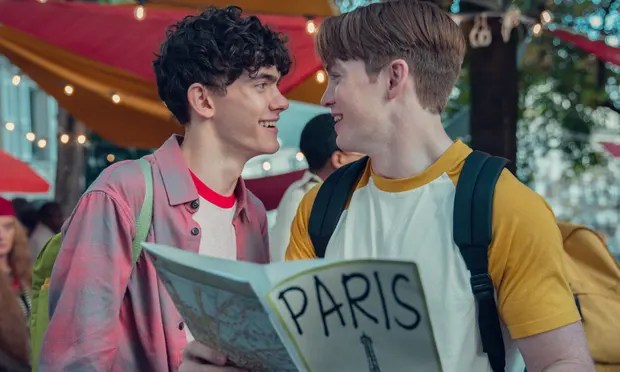
If you are unfamiliar with Heartstopper, it is a coming-of-age story that is currently running on Netflix. The story was adapted from a graphic novel by Alice Oseman. It follows two teenagers and their friend group as they deal with the complexities of adolescence in high school. The two main characters, Charlie and Nick, fall in love and deal with being in the closet and choosing to come out in high school. This season had everything and all in one friend group: transsexuality, bisexuality, gay, asexuality and more.
The one thing I do want to mention, which was actually a little triggering for me, was Charlie’s eating disorder. Charlie’s story was SOOOOO similar to my own growing up.
I started disordered eating when I was 11 but didn’t fully understand what I was doing until I was 13. And as anyone with an eating disorder will tell you, it’s never about the food.
Just like Charlie, I was intensely bullied in middle school and high school. I’ve always been 100% my most authentic self. So, I was out and very open about who I was as soon as I knew who I was. In addition to bullying in school, I had a VERY rough and abusive home life. I also had a father who didn’t accept or love me.
So, just like Charlie, my disordered eating became about control. It was the only thing in my life that I could master. I also think I believed that if I was thin, I’d be more perfect, and if I was more perfect, I’d be more loved and accepted.
And to some degree, I was more accepted. The thinner I got I heard things like “I wish I was as thin as you” which carried my ED into my 30s. I was very much the 90s waif a la Kate Moss which was kind of the aesthetic at that time. Which is why we should never comment on someone’s weight or body. You never know what is going on.
Now I love my body, I accept it, I love it. Yes, I’m working to lose weight but so I can be healthy and strong. It’s not about looking a certain way, fitting into a smaller size, or getting someone’s acceptance. I want this body to carry me into my next 50 years, so I honor it, love it, nourish it.
I want to give a huge KUDOS to Heartstopper and Netflix for bringing up the topic of men with eating disorders, as I feel it doesn’t get talked about enough. The reality is that 1 in 3 people with an ED is male. In a world where men (and young boys) are told to “man up”, it can be difficult for us to talk about our bodies or what we are feeling.
And with so many men working to bulk up, gain muscles, get “jacked” and focus on obtaining an “aesthetic” body, body dysmorphia in men can often be disguised as simply men working out. We need to focus on a more gender sensitive approach to talking about bodies and body dysmorphia.
Eating disorder recovery is a multi-prong approach that involves counseling, Nutrional support and addressing the root causes of the disordered eating.
Luckily, I found yoga and Pilates in my 30s, which helped me to connect to my body in healthier ways. To tune into my body’s needs. To nourish it with the right foods. And to use exercise to celebrate my body for all it can do, instead of punishing it for what I ate.
Even now, I focus on loving and accepting my body. Even though I am currently working on losing weight and gaining more muscle, but my focus is on being healthier and stronger. I am not trying to live up to an aesthetic or someone else’s ideal of what men should look like. The difference now is I am doing it for me, by my choice, not because of outside pressure.
I want a stronger and healthier body to carry me into the next 50 years of my life. That is why I work out now. To gain ease in and comfortability in my body, as well as flexibility, better posture, and more.
Now I honor, love, and accept my body.
No matter what size or shape, you are accepted, you are loved.
 Christopher Ian